The Best Air Conditioning Installation in Lincoln!
Most people don’t think much about their air conditioner until it’s August and the thing won’t turn on. Then they’re on the phone in a panic, trying to figure out who to call, how fast they can get here, and whether “a new unit” means $3,000 or $10,000. Having done this work in Lincoln for as long as I have, I’ve had that conversation more times than I can count.
This page is for people who aren’t in a panic yet — homeowners thinking ahead, planning a replacement before the old system fails, or moving into a house that doesn’t have central air and wondering what that project actually involves. Here’s what I know about getting it right.
AC sizing question nobody talks about enough
Spend five minutes on the internet looking up air conditioner installation, and you’ll find calculators that spit out a recommendation based on square footage. I’d ignore them. Square footage is one variable. It’s not even close to the most important one.
What matters for a Lincoln home is a proper load calculation — Manual J, in the trade — that factors in ceiling height, insulation values, window orientation, duct condition, and the specific thermal behavior of your house. A 1960s ranch in the Near South neighborhood performs completely differently from a two-story built in Wilderness Hills in 2018, even if they’re the same square footage. The older house might have minimal attic insulation and original windows. The newer one might have a bonus room over the garage that creates a heat island nobody accounted for.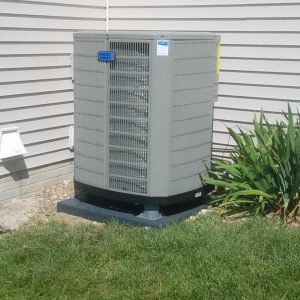
I’ve never been a fan of oversized equipment. The industry has a long history of going bigger because customers sometimes equate size with power, and because a bigger unit protects the contractor if the homeowner complains it doesn’t cool fast enough. But an oversized AC will short-cycle — it kicks on, drops the temperature quickly, and shuts off before it’s had time to pull humidity out of the air. In July in Nebraska, the humidity makes 85 degrees feel like 95. You end up with a house that’s technically the right temperature and still feels sticky and uncomfortable.
Undersized is its own problem, obviously. But honest sizing, based on actual math, produces a system that runs longer cycles, dehumidifies properly, and maintains more consistent temperatures. It also tends to last longer because it’s not hammering on and off all day.
What central AC installation actually involves
For most Lincoln homes, we’re talking about a split system: an outdoor condensing unit and an indoor coil that connects to the furnace or air handler already in place. The refrigerant lines run between them, and the existing ductwork distributes conditioned air through the house.
We install American Standard equipment. I’ve worked with most of the major brands over the years, and I keep coming back to American Standard because of how they hold up in this climate — the temperature swings here are hard on equipment. I’ve seen cheaper units degrade noticeably faster.
A typical installation is a one-day job. We pull permits (yes, every time — you don’t want an unpermitted HVAC installation showing up in a home sale), vacuum and pressure-test the refrigerant circuit, verify that airflow through the duct system is balanced, and commission the unit before we leave. If the ductwork has issues — collapsed flex, undersized returns, disconnected sections — we’ll find that before we put a new unit in. There’s no point in installing a high-efficiency system and then running it through compromised ducts.
A new air conditioning installation in Lincoln typically runs between $5,500 and $9,500. That range reflects differences in system size, efficiency ratings, and whether ductwork needs attention. A phone quote is essentially a guess. We’ll give you a real number after we see the house.
When a ductless Mitsubishi mini split is the better answer
There’s a category of Lincoln homes that central air doesn’t serve well — and I say that as someone who mostly installs central air. Older homes built before air conditioning was standard, houses where the ductwork never quite reached a finished basement, additions, sunrooms, and detached garages that were converted to living space. In those situations, trying to shoehorn central air into a space that wasn’t designed for it usually produces mediocre results at significant expense.
Mitsubishi’s ductless mini split systems have changed what’s possible in those spaces. These units are quiet, highly efficient, and handle Nebraska winters as well as summers — they heat and cool. The zoning control is something central systems genuinely can’t match: you run the head unit in the room you’re using and leave the others off. A single-zone install costs considerably less than a full central system, and multi-zone configurations let you cover several areas with one outdoor unit.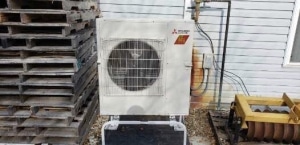
We’ve put Mitsubishi systems in craftsman houses in University Place, where the original plaster walls made ductwork impractical, in home offices where the homeowner was tired of fighting with the main thermostat, and in a few commercial spaces that needed supplemental cooling for specific areas. Whether it fits a given project depends on the specifics — worth a conversation.
The thing most people overlook when choosing an AC installer
I’d look harder at the company than the equipment. The equipment brands that any reputable contractor installs are all reasonably good. The installation is what determines whether a good piece of equipment performs the way it should.
Ask if they pull permits. Ask who’s actually doing the work — some companies send the lead tech for the estimate and a less experienced crew for the installation. Ask how they handle warranty work if something goes wrong in the first year, because it will occasionally, and what that process looks like. A contractor who’s been working in Lincoln for decades will know this housing stock, know what the Lincoln Electric System rebate programs look like, and be easy to reach when you need them.
Bill’s Heating & Air Conditioning has been installing air conditioning systems in Lincoln since 1952. Our technicians are background-checked, fully certified, and trained on both American Standard central systems and Mitsubishi ductless equipment. We pull permits on every installation, we don’t cut corners on refrigerant work, and we back our installations with the manufacturer’s warranty plus our own service guarantee.
If your current system is struggling, aging out, or just not keeping up the way it used to, call us at (402) 477-1371 or schedule an in-home estimate online. We’ll look at your home, run the numbers, and give you a straight answer on what you need — not what gets us the biggest ticket.
 If you do choose to install a new Air Conditioner, Bill’s has a special relationship with American Standard Heating and Cooling. We have attained the unique status of