How to Keep Your HVAC System Running Through Lincoln’s Wild Weather
Real seasonal maintenance advice from a Heating and Cooling Business owner who’s been fixing Lincoln’s furnaces and ACs since the 1980’s.
Listen, I’ve been working on HVAC systems in Lincoln for a while now, and I’ll tell you something most people don’t realize. Your heating and cooling equipment faces some of the toughest conditions in the country right here in Nebraska. Last winter, we had that stretch where it hit -8°F for five straight days, remember? Then come July, we’re sweating through 100-degree heat with humidity that makes it feel like you’re breathing through a wet blanket.
Your HVAC system is working overtime compared to the same equipment in, say, California or North Carolina. That’s why I can’t stress enough how important seasonal maintenance is around here. It’s not optional if you want to avoid those midnight emergency calls when your furnace quits on Christmas Eve, or your AC dies during your kid’s graduation party.
I wrote this guide because after thousands of service calls around Lincoln, from downtown apartments to those big houses out in Fallbrook, I keep seeing the same preventable problems over and over. Most of the time, a little bit of attention at the right time of year would’ve saved folks a ton of money and hassle. So let’s walk through what you need to do for your system each season, and I’ll share some of the real-world problems I run into most often in Lincoln homes.
Getting Your Air Conditioner Ready for Lincoln Summers
March and April are when you want to think about your AC, even though it might still be chilly outside. I learned this lesson the hard way back in 2012 when we had that early heat wave in May. Suddenly everyone in Lincoln wanted their AC looked at the same week, and we were booked solid for three weeks straight. Some folks were sweltering in 90-degree heat because they waited until they actually needed their AC to find out it wasn’t working.
Here’s what I do at my own house every spring, and what I recommend to every homeowner in Lincoln. First thing is the air filter. I know everyone says this, but seriously, just change it. Get in the habit of checking it the first day of every month when temperatures are going to be extreme. During spring, when all the cottonwood trees are doing their thing and pollen counts are sky-high, that filter gets nasty fast. A dirty filter makes your system work maybe fifteen percent harder, and that adds up on your electric bill from Lincoln Electric System real quick.
The outdoor unit is usually sitting there full of leaves, seeds, and cottonwood fluff from last fall. Go out there with your garden hose and give it a gentle rinse. Don’t use a pressure washer though, I’ve seen people bend those aluminum fins and then wonder why their AC isn’t cooling right. Just regular hose pressure from a couple feet away works fine. Clear out any weeds or grass growing around it, too. The thing needs room to breathe, at least a couple feet of clearance all the way around.
Now, your thermostat. I can’t tell you how many service calls I’ve been on where the problem was just a thermostat that wasn’t reading the temperature right. Put a good thermometer next to it and compare. If they’re off by more than a couple degrees, that thermostat probably needs replacing or at least recalibrating. While you’re at it, consider upgrading to a programmable one if you’re still using that old dial-type. The newer ones pay for themselves pretty quickly through energy savings, and you can set them to automatically bump the temperature up when you’re at work instead of cooling an empty house all day.
Here’s something most people don’t think about until it’s too late. That condensate drain line. Your AC pulls moisture out of the air, and it’s got to go somewhere. There’s a little PVC pipe that drains that water away. In Lincoln’s humid summers, that line can get clogged up with algae and gunk. I’ve seen it overflow and cause water damage to ceilings and walls. Takes five minutes to prevent it. Pour a cup of white vinegar or bleach down that drain line in the spring. Kills the algae before it becomes a problem.
One more thing before you just flip on the AC for the first time. Turn it on for a test run while it’s still cool outside. Set your thermostat to cooling mode and drop it a few degrees below room temperature. Listen to how it sounds. Air should be coming out of all your vents nice and strong. If you hear grinding or squealing or banging, or if some rooms aren’t getting any air, you’ve got a problem that needs fixing before summer actually hits. Way easier to get that handled in April than in July when we’re slammed with calls.
Pro tip from the field: I tell all my service contract customers to schedule their spring AC check in March before everyone else remembers they have an air conditioner. You get better appointment times, we’re not rushed, and if we find something that needs a part ordered, there’s plenty of time to get it done before you actually need cooling.
Surviving Summer When Your AC Is Your Best Friend
Once summer hits Lincoln, your air conditioner becomes critical infrastructure. I’ve been on calls where it’s 98 degrees outside and the AC just died, and you can see the panic on people’s faces. With how hot and humid it gets here, this isn’t just about comfort anymore, it’s about safety, especially for elderly folks and little kids.
During the peak of summer, you need to stay on top of that filter situation I mentioned before. Check it monthly at minimum. If you’ve got pets or if someone in the house has allergies, check it even more often. A clogged filter is the number one cause of summer AC problems that I see. It restricts airflow, makes the system work harder, drives up your electric bill, and can eventually cause the whole thing to freeze up or burn out the blower motor.
Keep an eye on your outdoor unit every couple weeks. Grass clippings from mowing, leaves blowing around, even birds building nests near it can all block airflow. I had a call once out in University Place where someone’s AC wasn’t working right and the problem was literally just a big pile of grass clippings on one side of the condenser from where they’d been mowing. Took two minutes to fix.
Let me give you some straight talk about thermostat settings because I think LES would appreciate this too. Every degree you set your thermostat below 78 in the summer increases your cooling costs by three to five percent. That adds up fast. I know 78 might sound warm, but if you’ve got ceiling fans going and you’re not blasting heat-generating appliances during the hottest part of the day, it’s actually pretty comfortable. And when you’re gone to work, there’s no reason to keep your house at 72 degrees for nobody. Bump it up to 82 or 85. Your AC won’t have to work nearly as hard.
Here’s something else that helps with those brutal Lincoln heat waves. Close your curtains and blinds on the south and west sides of your house during the afternoon. That summer sun just pours heat through windows. You’re basically fighting your air conditioner with solar heat gain if you leave them open. Simple thing, but it makes a real difference.
Watch your energy bills through the summer. If you see a sudden spike that doesn’t make sense, that’s often your first warning sign that something’s going wrong with your AC. Maybe refrigerant is leaking out slowly, or the capacitor is starting to fail, or the compressor is struggling. Don’t ignore those warning signs. The sooner you catch a problem, the cheaper it is to fix.
Emergency warning: If you see ice forming on the copper lines going into your house or on the indoor coil, shut the system off immediately and call us. That ice means something is seriously wrong, either a severe airflow restriction or low refrigerant. Running it with ice on there will destroy your compressor, and that’s a multi-thousand-dollar fix. Just turn it off, let it thaw, and we’ll come figure out what’s causing it.
Fall Is When You Prepare Your Furnace for Nebraska Winter
This is the most important maintenance season of the year for Lincoln homeowners, hands down. I’ve been on middle-of-the-night emergency calls in January when it’s below zero and someone’s furnace quit working. Their pipes are starting to freeze, they’re huddled up with space heaters, and they’re looking at me like I’m the cavalry coming over the hill. You don’t want to be in that situation, trust me.
September or October is when you need to get your furnace checked. Not November when everyone else suddenly remembers they have a furnace, and definitely not December when it’s already cold. This is non-negotiable if you ask me. A professional furnace inspection isn’t just about making sure it works. We’re checking for carbon monoxide leaks, cracks in the heat exchanger, proper gas combustion, all the safety stuff. That heat exchanger is what separates the combustion gases from the air going into your house. If it’s cracked, you could be pumping carbon monoxide into your home without even knowing it.
I cannot emphasize this enough. Get your carbon monoxide detectors checked. New batteries at minimum, but if they’re more than five to seven years old, replace the whole unit. You need them on every floor of your house and near bedrooms. Carbon monoxide has no smell, no color, nothing. People just start feeling sick, like they’ve got the flu, and they have no idea what’s causing it. In a worst-case scenario, you just don’t wake up. This isn’t me trying to scare you, it’s just reality. I’ve seen it.
Get a new furnace filter before heating season starts. These things are cheap. You’re protecting thousands of dollars worth of equipment with a twenty-dollar filter. During the heating season in Lincoln, plan on changing it every couple months minimum. More often if you notice it getting dirty or if airflow seems restricted.
Before you need heat, like late September when it’s still pleasant outside, turn your thermostat to heat mode and bump it up a few degrees. Make sure the furnace actually fires up and warm air comes out of all your vents. Listen to how it sounds. A well-maintained furnace should fire up smoothly and run relatively quietly. If you hear rumbling, banging, or if it takes multiple tries to start, something needs attention. Better to find out now than on the first night it drops to 15 degrees.
This is a good time to check your windows and doors for drafts, too. Every bit of cold air leaking in is heat you’re paying to replace. Get some weatherstripping, caulk the gaps, make sure your storm windows are in good shape. Out in neighborhoods like Country Club and Eastridge where you’ve got those older homes with original windows, this stuff really matters. I’ve seen heating bills drop by a couple hundred bucks for the winter just from properly sealing up a drafty house.
If you’ve got ductwork in your attic or crawlspace, and most Lincoln homes do, make sure it’s sealed and insulated properly. Ductwork leaks are a huge source of wasted energy. You’re heating up your attic or your crawlspace instead of your living room. If you see any disconnected ducts or big gaps at the joints, get that sealed up. We use mastic sealant, not duct tape ironically enough. Duct tape doesn’t actually work well for ducts. We actually use a combination of tape and mastic.
One last thing. If you’ve got ceiling fans, flip that little switch on the side that reverses the direction. In winter mode they should spin clockwise when you look up at them. This pushes the warm air that’s collected at your ceiling back down where you actually want it. Makes a noticeable difference in rooms with high ceilings.
Something I learned the hard way: A few years back I had a customer call saying their furnace was running but no heat was coming out. I drove all the way out to Wilderness Hills in a snowstorm, got there, and realized someone had accidentally switched the thermostat to AC instead of heat. I felt pretty silly charging them a service call for that, so now I always ask people to check their thermostat settings before I come out. Save yourself the service call fee and double-check that first.
Getting Through Lincoln’s Harsh Winters
Once winter really settles in, your furnace is probably going to be running a lot. Those cold snaps we get, sometimes for weeks at a time, really put your heating system through its paces. You need to keep an eye on things because problems can develop fast when equipment is running constantly.
Pay attention to how your furnace sounds and acts. If it starts cycling on and off more frequently than normal, that’s called short cycling, and it usually means something is wrong. Could be a clogged filter restricting airflow, could be a failing part, could be a thermostat problem. Don’t ignore it because it’ll just get worse and likely fail at the worst possible time.
During heavy snow, check those outdoor vents for your furnace. Modern high-efficiency furnaces have PVC pipes that stick out through the side of your house for intake and exhaust. If those get blocked by snow drifts, your furnace will shut down as a safety measure. I’ve gotten calls where people thought their furnace was broken and it was just snow blocking the vent. Quick fix, but you need to know to check for it.
Keep your vents and registers clear inside the house too. I see people stack boxes in front of them, push furniture over them, close them off in rooms they don’t use. Your furnace is designed to push a certain volume of air through your house. When you block vents, you mess with that balance, and it makes the whole system work less efficiently. Plus you end up with cold spots in your house.
Winter is brutally dry in Lincoln, and I mean bone dry. That dry air makes your house feel colder than it actually is, so people crank up the heat even more. If you can afford it, get a humidifier. You’ll be more comfortable at a lower temperature setting, which saves you money and wear on your furnace. Plus, it’s just healthier. Static shocks, bloody noses, dry skin, all that stuff gets better with proper humidity.
If you’re going to be away from your house for an extended period in winter, don’t turn your heat off completely. Set it to at least 55 degrees. Frozen pipes are no joke. They burst, and when they do, you’re looking at thousands of dollars in water damage. I’ve seen it happen when folks went on vacation and thought they were saving money by turning the heat way down. Not worth it.
One thing specific to Nebraska winters. We get these wild temperature swings. It’ll be 50 degrees one day and 10 degrees two days later. Those swings are hard on your equipment. Parts expand and contract, seals can crack, things that were working fine suddenly aren’t. It’s just the reality of living here. All the more reason to stay on top of maintenance and catch small problems before they become emergencies.
Carbon monoxide symptoms you need to know: Headaches, dizziness, nausea, confusion, feeling flu-like when multiple people in the house feel sick at the same time. If your CO detector goes off, get everyone out of the house immediately and call 911. Don’t try to figure it out yourself. We’ll come check it after the fire department clears the scene, but your family’s safety comes first, always.
Common Problems I Deal with Every Week in Lincoln
After spending most of my adult life fixing HVAC systems around town, you start to see patterns. There are maybe half a dozen issues that make up probably seventy percent of my service calls. Most of them are pretty straightforward, and some you can even handle yourself if you’re comfortable doing basic troubleshooting.
When Your System Won’t Turn On At All
This is probably the most common call I get. Someone’s AC or furnace just won’t start. Before you call anybody, check a few basic things. First, is your thermostat actually set right? I know it sounds obvious, but you’d be surprised how often someone has accidentally switched it to the wrong mode or set the temperature wrong. Check the batteries in your thermostat too. Dead batteries will make it seem like your whole system is dead.
Next, go look at your electrical panel. Find the breaker for your HVAC system and make sure it hasn’t tripped. Sometimes there’s also a disconnect switch near the outdoor unit that might have been switched off accidentally, maybe when someone was doing yard work. And your furnace probably has a little light switch on or near it. Make sure that’s on too. I’ve driven across town to flip a switch that was off.
If none of that works, then yeah, you’ve probably got a real problem, and you need to call us. Could be a failed capacitor, bad contactor, wiring issue, any number of things that need a trained tech to diagnose and fix safely.
Some Rooms Are Hot While Others Are Cold
This drives people crazy, and I get it. You’ve got the thermostat set to 72, but your bedroom is 78 and your living room is 68. That’s usually a ductwork or airflow problem. Start simple. Make sure all your vents are open and nothing is blocking them. Check your filter because a dirty filter can definitely cause uneven heating or cooling.
If those don’t fix it, you might have leaky ducts, or your house might just need better insulation in some areas, or the ductwork might not be sized or balanced correctly for your layout. That last one is really common in older Lincoln homes where someone finished a basement or added a room without properly modifying the duct system. Those problems usually need a professional to sort out properly.
Strange Noises Coming from Your System
Weird noises are actually good in a way because they’re your system telling you something is wrong before it completely fails. Different sounds mean different things. A high-pitched squealing often means a belt is worn out or a motor bearing is going bad. Banging or clanging could be a loose part rattling around, or your ductwork expanding and contracting as it heats up and cools down. Clicking sounds are usually electrical, like a relay or your thermostat.
A scraping or grinding sound is bad news. That usually means metal on metal contact somewhere it shouldn’t be, and you need to shut the system down and call for service before something gets damaged beyond repair. Normal operation should be fairly quiet. You’ll hear the whoosh of air and the hum of the blower, but nothing loud or alarming.
Your Electric Bill Suddenly Jumped
I help people with this one all the time. Their LES bill goes from something reasonable to suddenly twice as much and they can’t figure out why. First thing to check is whether your usage actually went up or if it’s just a rate change or seasonal adjustment. Look at the kilowatt hours used, not just the dollar amount.
If your usage actually did spike, your HVAC system is often the culprit. A dirty filter, low refrigerant, failing compressor, duct leaks, any of these can make your system use way more electricity to do the same job. Sometimes it’s not the system at all though. Maybe someone left a space heater running in a basement room, or your water heater is failing, or your refrigerator is dying. But start with the HVAC because it’s the biggest energy user in most homes.
System Running Constantly But Not Cooling or Heating Enough
When your system runs and runs but never quite gets your house to the temperature you want, a few things could be happening. In summer, you might be low on refrigerant. That’s not something you can fix yourself, you need a licensed tech. Could also be that your system is undersized for your house, though that usually would’ve been a problem from day one.
More likely, especially if this is a new problem, you’ve got dirty coils, a clogged filter, blocked airflow somewhere, or your outdoor unit is in direct sunlight and overheating. I’ve also seen cases where someone added insulation to their attic and accidentally blocked soffit vents, causing the attic to get super-hot, which makes the AC work way harder. And honestly, on those days when it hits 95 with high humidity, even a perfectly working system might struggle to keep up. There are limits to what these machines can do in extreme conditions.
Water Leaking Somewhere It Shouldn’t Be
Water leaks are something you need to address fast because water damage adds up quick. If you’ve got water around your indoor unit, that condensate drain line is probably clogged. You can try clearing it yourself with a wet-dry vac on the outside drain opening. Sometimes that sucks the clog right out. If that doesn’t work, or if you see water but can’t figure out where it’s coming from, call us before it damages your floors or ceiling.
Water freezing on your AC coils is a different problem that I covered earlier. That’s an immediate shut-it-down situation. And if you’ve got a high-efficiency furnace and you see water around it, that’s usually normal condensation that just needs to drain properly. But if it’s more than a little bit, something might be wrong with the condensate pump or drain.
When to DIY and when to call a pro
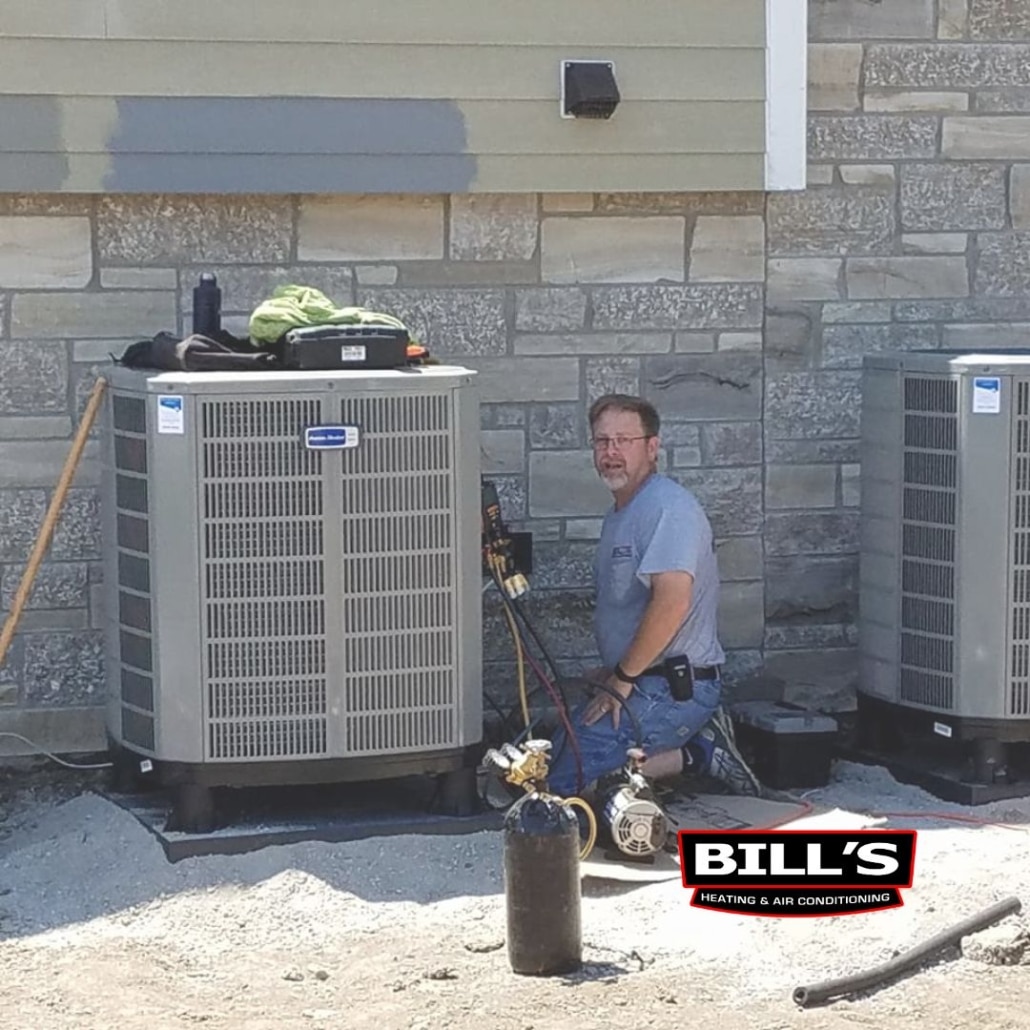
Tech performing an HVAC Service Contract Appointment.
I’m all for homeowners doing basic maintenance. Changing filters, keeping things clean, checking obvious stuff, that’s all fair game. But refrigerant work, electrical repairs, anything involving gas lines, taking apart your equipment’s internals, that stuff requires training and proper tools for a reason. It’s not just about getting it to work, it’s about doing it safely. I’ve seen some scary amateur repairs over the years, and the cost to fix those mistakes is always way more than it would’ve cost to just call us in the first place.
Making Your HVAC System More Efficient in Lincoln
Energy efficiency matters a lot more around here than in places with milder climates. Your heating and cooling costs are probably your biggest utility expense most of the year. I’ve helped a lot of Lincoln homeowners cut their energy bills substantially with some pretty straightforward improvements.
The single best thing you can do is get your attic insulation right. Most older homes around here don’t have nearly enough. You want at least R-49 up there for Nebraska winters. Good attic insulation keeps heat in during winter and keeps your attic from turning into an oven in summer. It’s usually one of the first things I recommend when someone’s complaining about high energy bills.
Air sealing is almost as important and way cheaper. Get some caulk and weatherstripping and go around your house sealing up the gaps and cracks. Around windows and doors especially, but also where pipes and wires come through walls, around light fixtures, anywhere air can leak in or out. People don’t realize how much conditioned air they’re losing through all these little gaps. It adds up to having a window wide open all the time.
If you’re still using an old dial thermostat, upgrade to a programmable one at minimum, or one of those smart thermostats if you want to get fancy. They work. You set it to automatically adjust temperatures when you’re sleeping or away, and you save money without thinking about it. I’ve got one at home and it’s paid for itself several times over.
Your ductwork is probably leaking if your house is more than twenty years old and you’ve never had it checked. Sealing your ducts can improve efficiency by twenty or thirty percent in some cases. That’s huge. We use professional mastic sealant, but if you can see obvious gaps and disconnected sections, you can tackle some of that yourself as a weekend project.
Eventually, if you’re running equipment that’s fifteen or twenty years old, it’s worth thinking about replacement. New systems are so much more efficient than what was standard back then. We’re talking thirty to fifty percent less energy use for the same amount of heating and cooling. Yeah, it’s an investment up front, but the energy savings are real, and you get the peace of mind of knowing you’ve got reliable equipment.
And don’t forget about Lincoln Electric System’s rebate programs. They offer rebates on high-efficiency equipment, smart thermostats, insulation upgrades, all sorts of stuff. Sometimes it’s over a thousand dollars back. We handle all that paperwork for our customers, so they don’t have to deal with it, and it makes upgrading a lot more affordable.
Don’t Wait Until Something Breaks
After almost fifty years of serving Lincoln families, we’ve learned that an ounce of prevention really is worth a pound of cure. Our maintenance plans keep your system running smoothly and catch problems before they leave you stuck in the cold or heat.
(402) 477-1371
We offer 24/7 emergency service because Nebraska weather doesn’t keep business hours.
Schedule your Seasonal Maintenance. (https://billscooling.com/contact/)
Serving Lincoln, Waverly, Hickman, and all of Lancaster County since 1953.
Why Lincoln Folks Keep Calling Bill’s Heating & Air Conditioning
Look, there are other HVAC companies in Lincoln, and I’m not going to pretend we’re the only option. But here’s what we do that keeps people coming back and recommending us to their neighbors. We show up when we say we will. Sounds basic, but you’d be surprised how rare that is. We give you honest pricing before we start the work, none of this “we’ll see what it takes” nonsense. And we don’t try to sell you stuff you don’t need.
All our keep up with training on the newer equipment too. The technology has changed a lot over the years, and you need to stay current.
We’re a family business, have been since the beginning. That means our reputation in Lincoln actually matters to us. We’re not some national chain that’s here today and gone tomorrow. We go to church with our customers, run into them at the grocery store, see them at high school football games. We have to live with our work, so we do it right.
When you call with an emergency, we prioritize getting someone to you as fast as possible. Not next week, not when it’s convenient. If your furnace is out in January or your AC is dead in July, that’s urgent, and we treat it that way. Our trucks are stocked with common parts so we can usually fix things on the first visit instead of having to come back later.
We offer 3 levels of maintenance agreements that include parts and labor guarantees, twice-yearly checkups, and accessory credits. Hundreds of Lincoln homeowners use them, and honestly, they make a big difference. Regular maintenance catches problems early and extends your equipment’s life.
HVAC Questions People Ask Me All the Time
How often do I really need to change my filter?
During peak heating or cooling season, check it monthly and change it when it looks dirty. That might be every month, might be every other month, depending on your situation. If you’ve got pets or allergies or someone in the house smokes, change it more often. The filter is cheap insurance for expensive equipment. Don’t skimp on it.
What temperature should I set my thermostat?
In summer, 78 degrees when your home is the sweet spot for balancing comfort and cost. Bump it up when you’re away. In winter, 68 when you’re awake and active, lower when you’re sleeping or gone. Every degree of adjustment costs you about three to five percent on your energy bill. Find what works for you, but those are good starting points.
Should I close vents in rooms I don’t use?
No, actually. Your system is balanced to push a certain amount of air through your whole house. When you close vents, you mess with that balance and can actually make the system work harder and less efficiently. If you’ve got rooms you really never use, there are better ways to zone your house, but just closing vents isn’t it.
How long should my furnace and AC last?
With good maintenance, expect fifteen to twenty years from a furnace and twelve to seventeen from central air. Without maintenance, cut those numbers way down. Nebraska’s climate is tough on equipment, so the upper end of those ranges requires you to actually take care of your stuff. I see neglected systems die at ten years and well-maintained ones going strong at twenty-five.
Do I need professional maintenance if my system seems fine?
Yes. Problems develop slowly over time. By the time you notice something is wrong, you’re often looking at a more expensive repair than if we’d caught it early during routine maintenance. Plus, we check safety stuff like carbon monoxide and gas combustion that you can’t really evaluate yourself. It’s like going to the dentist. You might feel fine, but you still need those checkups.
Why does my AC freeze up?
Usually, it’s airflow restriction from a dirty filter or closed vents, or you’re low on refrigerant. When it happens, turn the system off completely and let it thaw. Then change your filter, make sure all your vents are open, and try again. If it freezes again, call us because you probably need refrigerant, which requires a licensed technician.
Can I do HVAC maintenance myself?
Some of it, sure. Changing filters, keeping your outdoor unit clear, basic cleaning, checking obvious things, that’s all fine. But leave the technical stuff to professionals. Refrigerant work requires EPA certification. Gas work and electrical work can be dangerous if you don’t know what you’re doing. And if you mess something up trying to fix it yourself, that usually costs more to repair than it would’ve cost to just call us initially.
Is it worth upgrading to a high-efficiency system?
Depends on your situation. If you’re running twenty-year-old equipment, absolutely. New systems are so much more efficient that the energy savings are substantial. If your current system is working fine and is less than ten years old, probably not worth replacing it yet. But when it does come time, go with high efficiency. The extra cost up front pays you back through lower energy bills, usually within eight to twelve years, plus your house will be more comfortable.
What should I do if I smell gas?
Get everyone out of the house immediately. Don’t flip any light switches, don’t use your phone inside the house, don’t try to find the source. Once you’re safely outside, call 911 and then Black Hills Energy’s emergency line at 888-890-5554 . They’ll send someone right away. Never mess around with gas leaks. We’ll come check your furnace after the gas company clears it, but your family’s safety comes first.
Do you really offer emergency service at night and on weekends?
Yes, twenty-four seven, three-sixty-five. HVAC emergencies happen when they happen, not on a convenient schedule. If your furnace quits at 2 AM on a Saturday when it’s below zero, you need help now, not Monday morning. We rotate on-call duty, and whoever’s on will respond. Been doing it that way for decades.
Ready to Stop Worrying About Your Heating and Cooling?
Whether you need routine maintenance, emergency repairs, or you’re thinking about upgrading your system, we’re here to help. Same folks who’ve been taking care of Lincoln’s HVAC needs since 1975.
(402) 477-1371
Give us a call.
Free estimates on system replacements. Fair pricing on everything else.
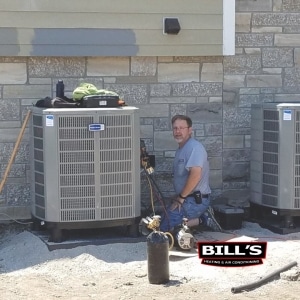 Todd Hildenbrand is the owner of Bill’s Heating & Air Conditioning. Bill’s has been in business since 1953, when Todd’s grandfather founded it. Bill’s is a local, family-owned Heating and Cooling company. Todd calls Lincoln home and is proud to serve his neighbors and friends with reliable equipment, honest work at a fair price.